
EPICS Team Advances TIR Work at Roswell ASR
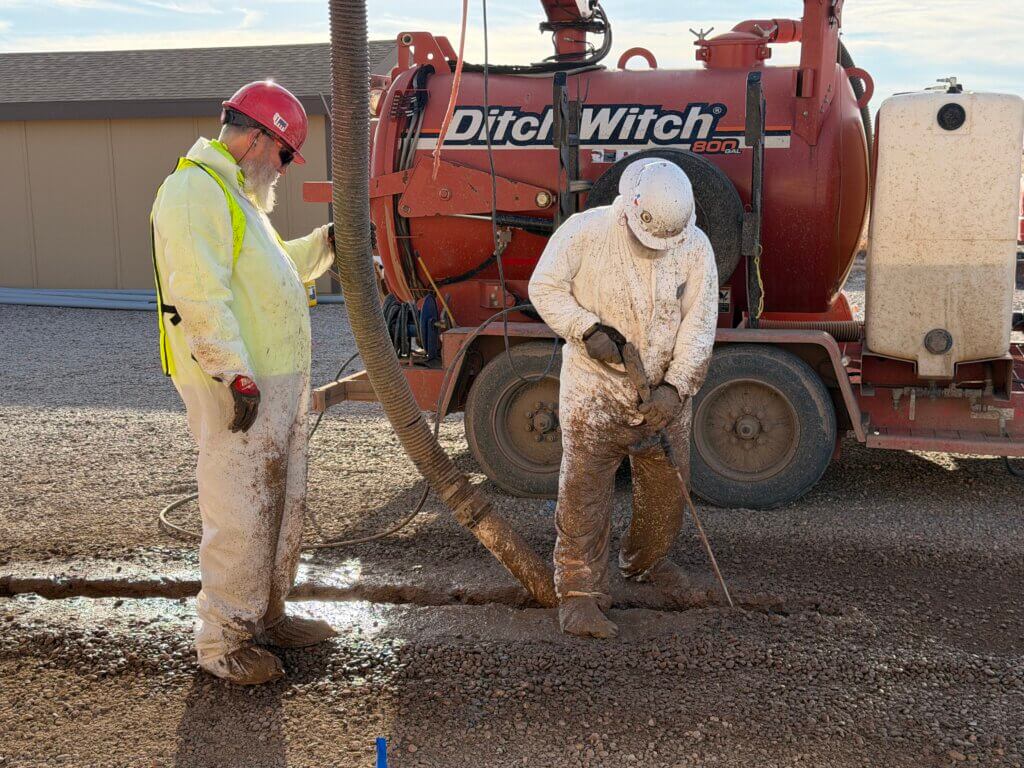
Last week, the EPICS Field Implementation Team, Jorge Kimbell, Roger Hyde, Michael “Rudy” Stokes, Paul Pelletier, and Rodney Landry, deployed to the Roswell, New Mexico Airport Surveillance Radar (ASR) site to complete key site preparation work in support of the Telecommunications Infrastructure Replacement (TIR) project.
TIR work at Roswell is focused on modernizing the FAA’s network infrastructure to support expanded Fiber Telecommunications Infrastructure (FTI) access and enable a future transition to IP-based telecommunications. This work is foundational because it prepares the facility for additional connectivity and equipment needed to meet evolving operational requirements while maintaining continuity in a live FAA environment.
At Roswell ASR, the project plan calls for a set of integrated upgrades that together ensure the site can safely receive new Ethernet service provided by telecommunications carriers and support the installation of new customer premises equipment (CPE, which refers to devices such as routers or modems located at the customer’s site), including:
- Exterior conduit pathway and access point
- Built-in capacity for growth and resilience
- Detectable, maintainable infrastructure
- Secure building entry and protection
- Dedicated power for critical communications equipment
- Grounding and bonding for system reliability
These elements are not just construction tasks. They are the physical prerequisites that enable the FAA to add modern, IP-ready telecommunications services at a radar facility that supports National Airspace System operations. In practical terms, this type of work helps ensure the systems that monitor and manage air traffic can continue operating reliably as the FAA transitions legacy services to modern infrastructure.
As Jorge noted, “We were doing hydro excavation or hydrovac trenching, and the process was extremely muddy and messy.” That mess is often a sign the method is doing its job safely, especially in utility-dense areas.
Hydrovac trenching uses pressurized water to loosen soil and a vacuum to remove it into a debris tank, letting crews expose utilities with less risk of damage than mechanical digging. This method aligns with the project plan, which identifies a water line parallel to the proposed trench path and recommends hydrovac excavation for about 50 feet near the exterior 6 o’clock wall to precisely locate and expose the line before trenching.
Thank you to Jorge and the entire EPICS Field Implementation Team for executing complex work under demanding conditions, representing our organization professionally, and delivering infrastructure improvements that support the FAA’s mission and the safety of the flying public.
Who We Are
Since our inception, we have partnered with the government to deliver services aligned with our customers’ plans, missions, and project goals.